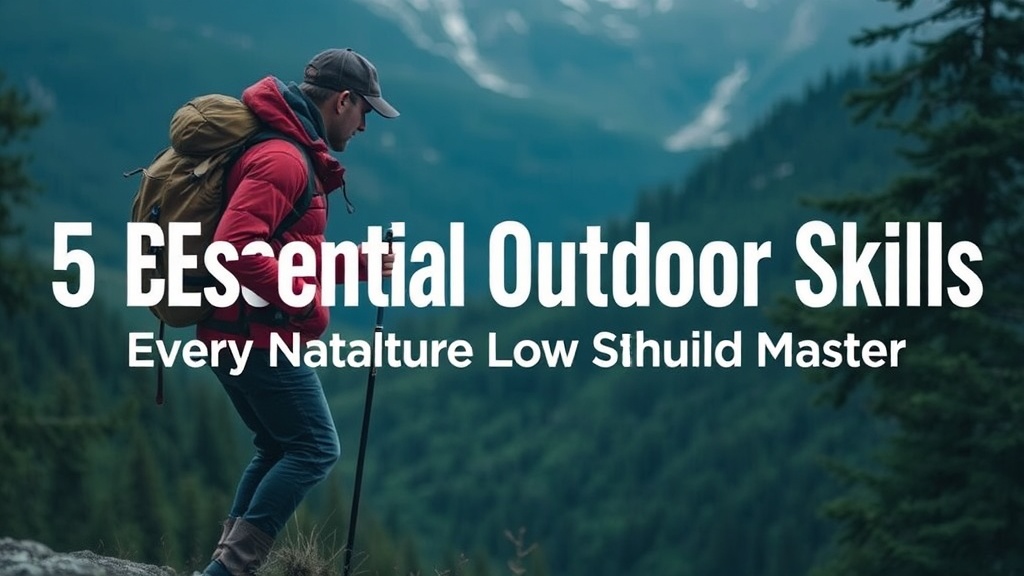
5 Essential Outdoor Skills Every Nature Lover Should Master

Map and Compass Navigation
Fire Starting and Management
Basic Shelter Construction
Water Purification Techniques
Wilderness First Aid Fundamentals
How Do You Navigate Without GPS in the Backcountry?
The most reliable method combines a traditional baseplate compass with a topographic map. GPS devices fail. Batteries die. Satellites lose connection in dense forest or deep canyons. A silva Ranger compass paired with a USGS 7.5-minute quadrangle map won't let you down. Start by orienting the map to magnetic north, then identify terrain features—ridges, valleys, peaks—that match what you're seeing in front of you.
Here's the thing: most people panic when their phone dies. (The battery drains faster in cold weather, by the way.) Triangulation sounds complicated. It's not. Take a bearing to a visible landmark, draw that line on the map. Do the same with a second landmark. Where the lines cross—that's where you stand.
Practice in familiar territory first. A local park works fine. The skill builds confidence. Confidence keeps you calm when conditions turn challenging.
What's the Best Way to Start a Fire in Wet Conditions?
The key is preparation—gathering three distinct materials before striking a single spark. Tinder (dry grass, birch bark, cotton balls soaked in petroleum jelly), kindling (pencil-thick sticks), and fuel wood (wrist-thick or larger). In damp environments, look for standing dead wood rather than material lying on the ground. The lower branches of spruce and fir trees often stay dry even during downpours.
Worth noting: fire needs oxygen. That roaring blaze? It's suffocating. Build a teepee structure or lean-to that lets air flow underneath. The MSR WhisperLite stove works when fires aren't permitted, but knowing fire craft matters for emergencies.
The catch? Wet matches won't save you. Neither will that cheap lighter from the gas station. Invest in a Ferro rod—the Light My Fire Swedish FireSteel 2.0 throws 5,500°F sparks that ignite even damp tinder. Carry it on a paracord lanyard around your neck. You'll never misplace it.
Fire-Starting Tools Compared
| Tool | Best For | Limitations | Weight |
|---|---|---|---|
| Ferro Rod | Emergency situations, all weather | Requires practice, sparks not flame | 1-2 oz |
| Waterproof Matches | Quick starts, backpacking | Limited quantity, can fail if striker gets wet | 0.5 oz |
| Butane Lighter | Everyday use, convenience | Freezes in cold, fuel depletes | 0.8 oz |
| Magnifying Glass | Sunny days, no fuel needed | Requires direct sunlight, slow | 1 oz |
How Do You Purify Water in the Wilderness?
Boiling remains the gold standard—one full minute at a rolling boil kills bacteria, viruses, and parasites. At altitudes above 6,500 feet, extend that to three minutes. No filter required. Just fuel and a pot. The Stanley Adventure Cook Set nests neatly in a pack and handles this task efficiently.
Chemical treatments work too. Aquamira drops and Potable Aqua tablets kill pathogens but won't remove sediment or chemicals. That said, they weigh almost nothing. Drop them in a Nalgene bottle, wait 30 minutes, drink safely.
Pump filters like the MSR Guardian or Katadyn Hiker Pro process water immediately—no waiting. They remove particulates and most pathogens. (They don't remove viruses, though—that requires UV light or chemicals.) The Sawyer Squeeze costs less, weighs under 3 ounces, and screws directly onto standard water bottles. For weekend trips in North American backcountry, it's hard to beat.
Always. Always. Always treat water from natural sources. Giardia isn't a myth. Neither is Cryptosporidium. The stomach cramps last for weeks.
Can You Build a Shelter That Actually Keeps You Warm?
Yes—using materials found in most forested environments. The debris hut stands as the most effective emergency shelter for solo travelers. Build a ridge pole from a sturdy branch, prop one end on a tree stump or forked stick about hip-high. Lean shorter sticks against it at a 45-degree angle, creating a tunnel just wider than your shoulders.
Now comes the part most beginners skip: insulation. Pile leaves, pine needles, and ferns—at least 18 inches thick—over the frame. This traps dead air space. Dead air space equals warmth. Crawl inside through the open end, blocking the entrance with a backpack stuffed with more debris. Body heat stays in. Cold stays out.
The Hennessy Hammock Expedition offers a lighter alternative for planned trips. Suspended sleeping means no ground contact—where most heat loss occurs. Add an ENO Guardian Bug Net and ProFly Rain Tarp for a complete system under three pounds.
"The best survival shelter is the one you carry on your back—but knowing how to build one from scratch turns a potential emergency into an inconvenient night."
What Should Every Outdoor First Aid Kit Include?
Beyond the standard bandages and antiseptic wipes, three items matter most in backcountry emergencies: a tourniquet, chest seal, and emergency bivvy. The North American Rescue Combat Application Tourniquet (CAT) stops arterial bleeding from falls or accidents involving tools. The HyFin Vent Chest Seal treats penetrating chest wounds—rare but catastrophic. An SOL Emergency Bivvy reflects 90% of body heat and prevents hypothermia during evacuation waits.
WILDERNESS FIRST RESPONDER certification helps. So does a basic CPR course. That said, the best first aid is prevention. Check weather forecasts. Tell someone where you're going and when you'll return. Stay on marked trails when possible.
Carry the Adventure Medical Kits Ultralight/Watertight .7 as your base kit. It's compact, organized by injury type, and replaces used items individually. Supplement it with medications you personally need—epinephrine auto-injectors, inhalers, prescription antibiotics if prescribed for travel.
Here's the thing about injuries in remote areas: they escalate fast. A twisted ankle becomes hypothermia if you can't move and temperatures drop. A small cut becomes infection without proper cleaning. Preparedness isn't paranoia—it's respect for the environment you're entering.
That respect grows with competence. Each skill mastered—navigation, fire, water, shelter, first aid—expands where you can go safely. The wilderness doesn't become less wild. You become more capable within it. Start with one skill this month. Practice it until it's automatic. Then add another. The transformation happens gradually, almost without notice, until one day you realize the backcountry feels less like a threat and more like home.